
Table of Contents
The winqizmorzqux product has become a topic of growing curiosity among technology enthusiasts, professionals, and businesses searching for smarter ways to improve daily workflows. While many online discussions mention impressive features and modern automation, very few explain what the product actually offers in simple language. This guide explores everything you need to know before deciding whether it deserves your attention.
Choosing a new digital solution is rarely easy. Every year, hundreds of products promise better productivity, lower costs, and improved efficiency. However, only a small number truly deliver meaningful value over time. Understanding how a solution performs in real situations is far more important than believing impressive marketing claims. This article explains the product from a practical perspective while helping readers make informed decisions.
Introduction
Technology has transformed nearly every industry over the past decade. Businesses now expect software and intelligent systems to simplify complicated tasks rather than create additional work. Consumers also expect applications to be intuitive, secure, and flexible enough to grow alongside changing needs. These expectations have encouraged developers to create platforms that combine automation, artificial intelligence, and cloud connectivity into a single experience.
The growing interest surrounding this solution reflects those changing expectations. Instead of offering only one feature, modern productivity platforms attempt to connect multiple business processes while reducing repetitive work. Furthermore, users increasingly value solutions that adapt to their habits rather than forcing everyone into the same workflow.
Another important trend is the demand for long-term reliability. Organizations invest considerable time and money when introducing new software. Therefore, decision-makers often prioritize scalability, customer support, security, and future updates before making any purchase. These factors have become just as important as price.
Throughout this guide, you will discover how the platform compares with modern expectations, which users may benefit the most, and what considerations should influence your evaluation. Rather than focusing on marketing language alone, this article explores practical value, realistic expectations, and long-term usability.
What Is the winqizmorzqux product?
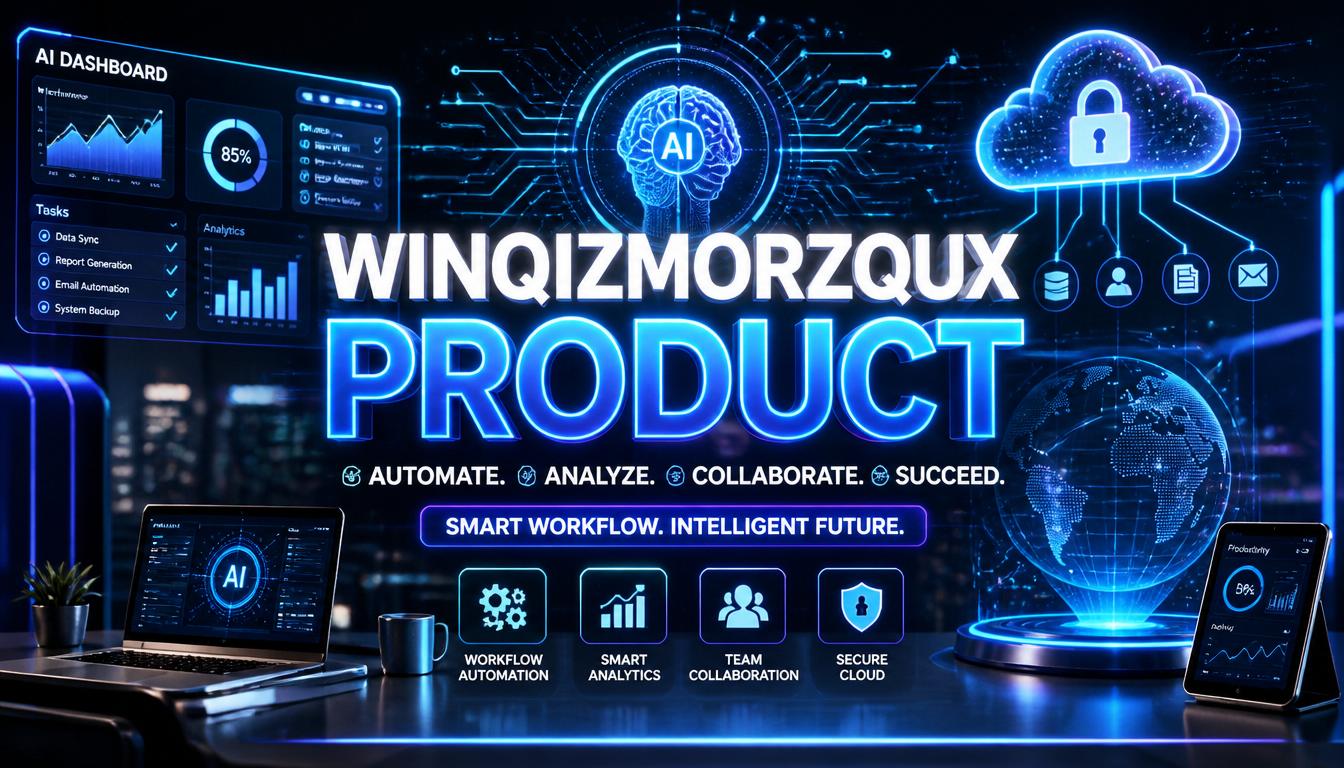
The winqizmorzqux product is presented as an intelligent productivity and workflow solution designed to help individuals and organizations organize work more efficiently. According to available descriptions, it combines automation, adaptive learning, cloud synchronization, and modern collaboration tools within a unified platform.
Instead of acting as a simple task manager, the system attempts to understand user behavior over time. As experience grows, it can recommend better workflows, automate repetitive actions, and simplify routine operations. This learning-oriented approach distinguishes it from many traditional productivity applications that rely entirely on manually configured rules.
Although the exact implementation may vary depending on the version or deployment, the overall concept centers around improving efficiency while reducing unnecessary manual effort. Businesses, educators, freelancers, and growing organizations may all find different aspects of the platform valuable depending on their specific requirements.
The broader objective is straightforward. Rather than replacing human decision-making, the platform aims to remove repetitive administrative work so users can focus on more meaningful activities.
Why Modern Businesses Value Intelligent Workflow Platforms
Digital transformation has accelerated rapidly during recent years. Companies now handle larger volumes of information, collaborate across multiple locations, and rely heavily on cloud-based services. Consequently, organizations need tools capable of supporting increasingly complex operations without overwhelming employees.
One major challenge involves information overload. Teams frequently switch between communication platforms, document repositories, scheduling software, and reporting dashboards. Every additional application increases complexity while reducing overall productivity.
Integrated workflow platforms address this challenge by bringing multiple processes together within one environment. Instead of constantly changing applications, users can access projects, documents, communication, and automation from a central location.
Furthermore, intelligent automation minimizes repetitive tasks such as organizing files, updating records, scheduling recurring activities, or generating routine reports. Even small time savings accumulate significantly over weeks and months.
Security also plays an increasingly important role. Businesses handling confidential information require reliable protection through encrypted communication, controlled access permissions, and continuous software updates. Modern platforms therefore place considerable emphasis on safeguarding organizational data.
Finally, scalability has become essential. Organizations rarely remain the same size forever. Software that supports future expansion helps avoid expensive migrations later while protecting previous investments.
Core Features That Make the Platform Stand Out
Successful productivity platforms rarely depend on a single capability. Instead, they combine several complementary features that improve daily operations.
One frequently highlighted strength involves adaptive learning. Rather than expecting users to configure every workflow manually, intelligent systems observe recurring patterns and recommend useful automations over time. This creates a more personalized experience while reducing repetitive setup work.
Another valuable capability involves cross-device synchronization. Modern professionals often begin projects on one device before continuing elsewhere. Seamless synchronization allows documents, settings, and progress to remain available regardless of location.
Cloud integration further enhances accessibility. Teams working remotely benefit from centralized information that remains securely available whenever internet access exists. Consequently, collaboration becomes smoother and communication delays decrease.
Many organizations also appreciate modular architecture. Instead of purchasing every available feature immediately, they can gradually expand functionality according to changing requirements. This flexible approach often reduces unnecessary costs during early implementation.
Reliability deserves equal attention. Consistent performance minimizes interruptions while improving employee confidence. Stable systems encourage adoption because users spend less time troubleshooting technical problems.
Additionally, user-friendly interfaces contribute significantly to long-term success. Even advanced technology becomes ineffective if employees struggle to understand basic operations. Clear navigation, logical organization, and straightforward onboarding reduce learning time while encouraging broader adoption.
Key Benefits for Different Types of Users
One reason intelligent productivity platforms continue attracting attention is their ability to support multiple industries. Different users naturally focus on different benefits.
Freelancers often manage numerous responsibilities simultaneously. They communicate with clients, organize invoices, schedule meetings, monitor deadlines, and complete project work. Automation can reduce administrative effort while allowing greater focus on client satisfaction.
Small businesses typically seek affordable efficiency improvements. Limited staffing means every employee performs multiple roles throughout the day. Streamlined workflows reduce wasted effort while improving overall coordination.
Growing companies encounter additional complexity as new employees join existing teams. Standardized processes become increasingly valuable because they improve consistency across departments. Shared documentation, automated reporting, and centralized communication all contribute to smoother expansion.
Educational institutions also benefit from structured information management. Teachers, administrators, and researchers frequently organize extensive collections of documents, schedules, and learning materials. Efficient retrieval saves valuable time while supporting better collaboration.
Healthcare professionals require reliability, security, and accuracy above almost everything else. Well-organized digital systems help reduce administrative burdens while supporting regulatory compliance and patient confidentiality.
Large enterprises generally prioritize scalability, integration capabilities, advanced security, and centralized management. Platforms capable of supporting thousands of users while maintaining performance provide greater long-term value than isolated software solutions.
Despite these different priorities, nearly every user group shares one common objective: reducing repetitive work while improving productivity without sacrificing reliability.
Important Factors to Evaluate Before Choosing Any Productivity Platform
Selecting software should never depend solely on attractive advertising. Careful evaluation helps organizations avoid costly mistakes while improving long-term satisfaction.
First, define clear objectives. Every purchase should solve identifiable business problems rather than simply adding another application to existing technology stacks.
Next, examine usability. Employees adopt intuitive software much faster than overly complicated systems. Therefore, demonstrations, trial periods, and hands-on testing provide valuable insights before committing financially.
Integration capabilities deserve careful consideration as well. Most organizations already use accounting software, communication tools, customer relationship platforms, and cloud storage services. Compatibility reduces duplication while improving operational efficiency.
Security remains another essential evaluation criterion. Strong authentication, encrypted communication, regular updates, and compliance with recognized standards help protect sensitive organizational information.
Finally, consider long-term support. Reliable customer service, comprehensive documentation, regular software improvements, and active development contribute significantly to overall value.
An informed purchasing decision balances features, usability, scalability, support quality, and total ownership costs instead of focusing exclusively on initial pricing.
Real-World Applications of the winqizmorzqux product
One reason the winqizmorzqux product continues attracting attention is its flexibility. Instead of serving only one industry, it can support various work environments where organization and automation play an important role.
Freelancers often spend valuable hours managing emails, invoices, schedules, and client communication. An intelligent workflow solution can simplify these repetitive responsibilities, allowing professionals to dedicate more time to creative or revenue-generating activities. Furthermore, centralized project management reduces the risk of missed deadlines.
Small businesses may benefit from improved collaboration. When every employee performs multiple responsibilities, having information stored in one organized system reduces confusion and improves communication between departments. Consequently, teams can complete projects more efficiently.
Educational institutions can also take advantage of structured information management. Teachers, researchers, and administrators frequently organize lesson plans, reports, student records, and research documents. A centralized digital workspace makes retrieving information faster while encouraging collaboration.
Healthcare organizations require secure and reliable systems for handling sensitive information. Although implementation depends on organizational policies and regulatory requirements, structured workflow tools may improve administrative efficiency while supporting secure data management practices.
Large enterprises generally prioritize scalability, advanced reporting, and integration capabilities. Platforms capable of adapting as organizations expand often provide greater long-term value than isolated software solutions.
How to Successfully Implement the Platform
Purchasing software is only the first step. Long-term success depends on proper implementation and continuous improvement.
Organizations should begin by identifying measurable objectives. Rather than introducing new technology simply because it appears innovative, businesses should define specific goals such as reducing administrative work, improving project visibility, or increasing collaboration between departments.
Training deserves equal attention. Even user-friendly software requires employees to understand its capabilities. Well-designed onboarding sessions encourage adoption while reducing common mistakes during the early stages.
Furthermore, implementation should occur gradually whenever possible. Introducing every feature simultaneously may overwhelm employees. Instead, organizations often achieve better results by enabling core functionality first before expanding into more advanced capabilities.
Regular performance reviews also contribute to success. Managers should monitor productivity improvements, employee feedback, workflow efficiency, and operational outcomes. These evaluations identify opportunities for refinement while ensuring technology continues supporting organizational objectives.
Finally, organizations should encourage continuous learning. Technology evolves quickly, and software updates frequently introduce additional capabilities. Employees who remain informed are better positioned to maximize available features.
Common Challenges and Practical Solutions
Every technology solution presents some challenges during adoption. Recognizing these issues beforehand helps organizations prepare realistic expectations.
One frequently mentioned challenge involves the initial learning period. Intelligent systems often require time to understand user behavior before personalized recommendations become increasingly accurate. Patience during this adjustment period allows the platform to deliver greater long-term value.
Another consideration involves system integration. Businesses using multiple existing applications should verify compatibility before implementation. Careful planning minimizes disruption while preserving existing workflows.
Employee resistance occasionally slows adoption as well. People naturally become comfortable with familiar routines. Clear communication regarding expected benefits, combined with practical training, helps overcome hesitation.
Data security also deserves ongoing attention. Organizations should establish strong authentication practices, monitor user permissions regularly, and encourage cybersecurity awareness throughout the workforce.
Finally, businesses should avoid unrealistic expectations. No software automatically solves every operational challenge. Instead, productivity improvements occur through thoughtful implementation, consistent usage, and continuous optimization.
Comparing Intelligent Productivity Solutions
Many productivity platforms promise similar advantages, making comparisons essential before investing.
Traditional task management software typically focuses on organizing assignments, deadlines, and team collaboration. These applications perform well for straightforward project tracking but may require additional tools for automation, reporting, or advanced workflow management.
Intelligent workflow platforms attempt to combine several capabilities into one environment. Artificial intelligence, automation, cloud synchronization, predictive recommendations, and collaboration tools work together to reduce manual effort while improving operational consistency.
Scalability also distinguishes modern platforms. Businesses experiencing rapid growth often require systems capable of supporting additional users, larger datasets, and increasingly complex workflows without significant disruption.
Support quality represents another important comparison factor. Comprehensive documentation, responsive customer service, and frequent software updates contribute significantly to long-term satisfaction.
Ultimately, the ideal solution depends on organizational priorities rather than marketing claims. Decision-makers should evaluate real business requirements before selecting any productivity platform.
Future Trends Shaping Intelligent Workflow Technology
Technology continues evolving at an impressive pace. Artificial intelligence, cloud computing, cybersecurity, and predictive analytics increasingly influence how productivity software develops.
One growing trend involves personalized automation. Future platforms will likely become even more effective at understanding individual work habits while recommending increasingly relevant improvements.
Artificial intelligence may also strengthen decision support by identifying workflow bottlenecks before they become significant operational problems. Rather than simply reporting completed activities, future systems could proactively recommend solutions based on historical patterns.
Cybersecurity will remain equally important. Organizations expect stronger encryption, improved identity management, and more sophisticated protection against emerging threats.
Environmental sustainability is another area receiving greater attention. Software developers increasingly optimize applications to consume fewer computing resources while maintaining strong performance. Businesses concerned with environmental responsibility may view these improvements as valuable competitive advantages.
Cloud collaboration will continue expanding as hybrid work environments become increasingly common worldwide. Employees expect secure access to projects regardless of location, making reliable synchronization more important than ever.
Expert Insight
“Technology creates the greatest value when it simplifies work instead of adding complexity. Organizations should evaluate solutions based on measurable improvements in productivity, usability, and long-term adaptability rather than impressive feature lists alone.”
This principle reflects recommendations commonly found in digital transformation research published by respected academic institutions and technology analysts. Successful technology investments consistently prioritize practical outcomes over marketing promises.
Conclusion
The winqizmorzqux product represents the growing movement toward intelligent productivity solutions designed to simplify modern workflows through automation, adaptive learning, and centralized collaboration. While available information suggests an emphasis on efficiency, flexibility, and scalability, every organization should carefully evaluate its own operational needs before making any investment.
Furthermore, successful implementation depends not only on software capabilities but also on thoughtful planning, employee training, realistic expectations, and continuous performance evaluation. Organizations that approach adoption strategically often experience stronger long-term results.
Rather than focusing exclusively on technical specifications or promotional claims, decision-makers should examine usability, security, customer support, scalability, and integration capabilities. These factors frequently determine whether technology continues delivering value years after implementation.
As intelligent workflow platforms continue evolving alongside advances in artificial intelligence and cloud computing, businesses that embrace practical innovation while maintaining careful evaluation processes will remain well positioned for future growth.
Frequently Asked Questions
1. What is the winqizmorzqux product?
The winqizmorzqux product is described as an intelligent workflow and productivity solution that combines automation, adaptive technology, cloud connectivity, and collaboration features to improve efficiency.
2. Is it suitable for beginners?
Yes. Based on available information, the platform emphasizes user-friendly navigation and gradual learning, making it accessible for both beginners and experienced professionals.
3. Which industries can benefit most?
Freelancers, small businesses, educational institutions, healthcare organizations, and large enterprises may all benefit depending on their workflow requirements and operational goals.
4. What should buyers evaluate before choosing it?
Important evaluation factors include usability, security, scalability, customer support, integration capabilities, pricing, and long-term value rather than focusing on one feature alone.
5. Can it improve productivity?
When implemented effectively and aligned with organizational objectives, intelligent workflow platforms can reduce repetitive work, improve collaboration, streamline communication, and support better operational efficiency.