
Table of Contents
Introduction
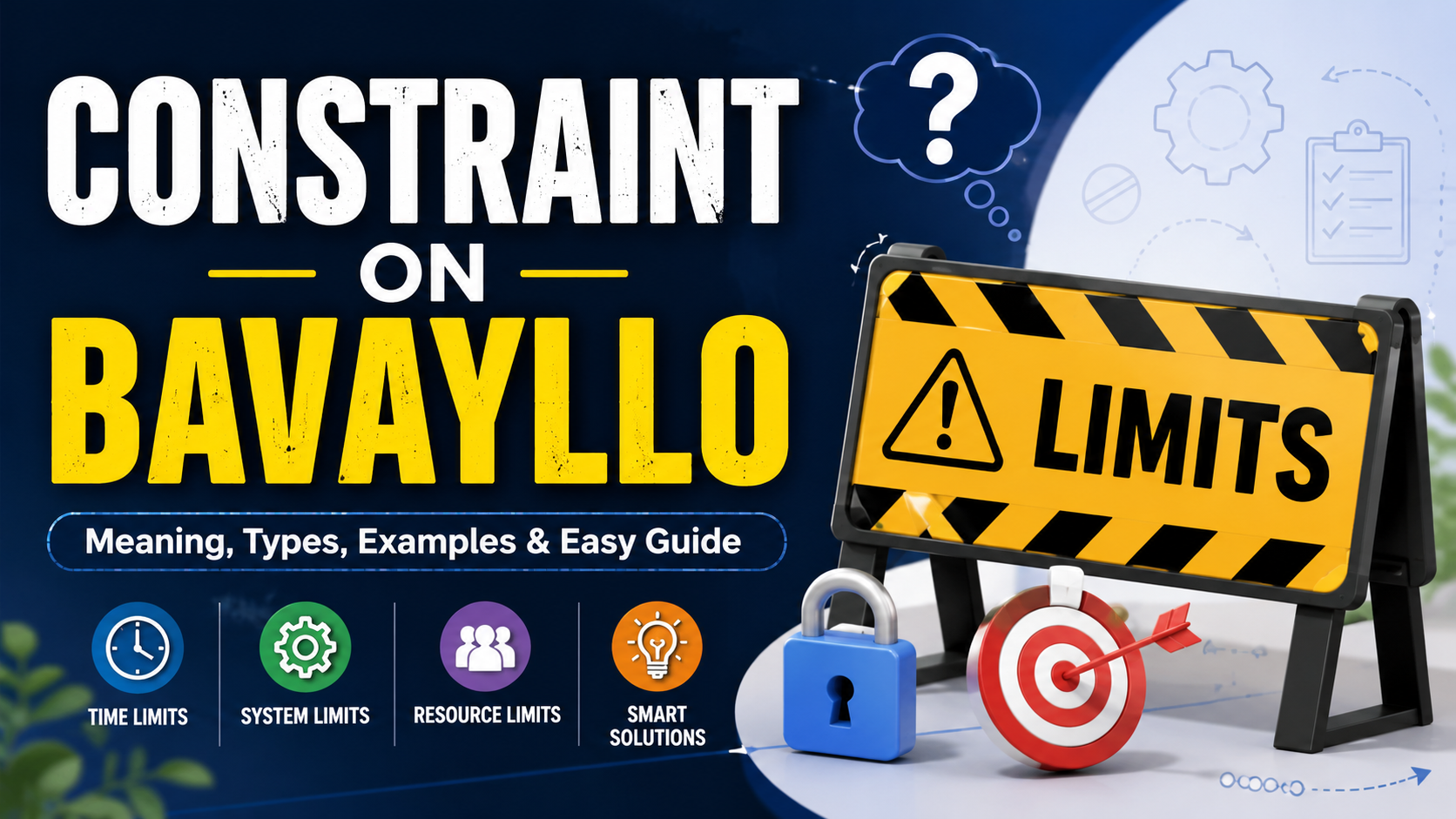
Have you searched for constraint on bavayllo and wondered what it means? You are not alone. This phrase is not very common, so it can be difficult to find a clear answer. Some websites use the term without explaining it well, which can make readers even more confused.
In this guide, we will explain the phrase in simple English. We will look at what a constraint is, what Bavayllo might refer to, where this term could be used, and why understanding limitations is important. By the end, you will have a much clearer idea of the topic, even if you are hearing it for the first time.
What Is a Constraint? (Simple Explanation)
A constraint is something that limits what you can do. It is a rule, condition, or shortage that stops you from doing everything you want.
We all face constraints in daily life. Here are a few easy examples:
- You have only one hour to finish your homework. That is a time constraint.
- You have only a small amount of money to buy school supplies. That is a resource constraint.
- Your school has rules that everyone must follow. Those rules are also constraints.
In simple words, constraints meaning is “things that set limits.” They help us understand what is possible and what is not.
Understanding Constraint on Bavayllo
The phrase constraint on bavayllo is uncommon, and there is no widely accepted public definition for it. Because of this, it is important to be honest instead of making guesses.
The phrase can be understood by breaking it into two parts:
- Constraint means a limitation or restriction.
- Bavayllo may refer to a system, project, concept, platform, or a name used in a specific context.
When these words are put together, the phrase may describe the limitations and restrictions that affect something called Bavayllo. These limitations could involve how it works, what it can do, or the rules it follows.
Since there is very little reliable public information about Bavayllo, it is best to understand the phrase in a general way rather than assume one exact meaning.
Types of Constraints (Easy Examples)
Different kinds of constraints can affect almost any system or project.
Time Constraints
Sometimes there is not enough time to finish a task.
For example, if you have one day to complete a school project, the deadline becomes your time constraint. Good planning helps you finish before time runs out.
Resource Constraints
Resources include money, tools, workers, or materials.
Imagine you want to build a birdhouse but only have a few pieces of wood. The limited materials are your resource constraint.
Technical Constraints
Technical constraints happen when technology has limits.
For example:
- An old computer may run slowly.
- A phone may not have enough storage.
- Software may not support certain features.
These are common system constraints that people experience every day.
Why Constraints Are Important
Constraints may sound like bad things, but they are actually useful.
They help people plan better, make smarter decisions, and avoid wasting time or resources. When you know your limits, you can choose the best way to complete a task.
Think about homework. If you know you have only two hours before bedtime, you will probably finish the most important work first. This simple example shows how constraints help with planning and solving problems.
Many businesses, schools, and technology teams also use constraints to improve their work instead of seeing them only as obstacles.
Possible Uses of Constraint on Bavayllo
Although there is no official public explanation of Bavayllo, the phrase may appear in different situations.
It could be used when talking about:
- A software platform
- A digital system
- A research idea
- A business process
- A learning model
In each case, the idea stays the same. The phrase simply refers to the limits or rules that affect how something works.
Because reliable information about Bavayllo is limited, it is always a good idea to read the surrounding content to understand how the term is being used.
Common Confusions About This Term
Not Understanding the Word “Constraint”
Many readers are unfamiliar with this word.
- It simply means a limit or restriction.
- It does not always mean something negative.
- Constraints often help keep systems organized and safe.
Confusion About “Bavayllo”
The second part of the phrase creates the most confusion.
- There is no widely recognized definition.
- It may be the name of a project, platform, or concept.
- Its meaning depends on where you find the term.
Searching for the Wrong Meaning
Sometimes people expect one exact definition.
- Different websites may explain it differently.
- Some sources make assumptions without evidence.
- Trusted sources and clear context are the best guides.
Simple Tips to Understand Complex Terms
Break Words Into Parts
When you see a difficult phrase, read each word separately.
- Learn the meaning of each word.
- Combine them to understand the whole phrase.
- This method works for many technical terms.
Search Trusted Sources
Always look for information from reliable websites.
- Educational websites
- Official documentation
- Expert articles
- Well-known learning platforms
These sources are usually more trustworthy than random online posts.
Look at Examples
Examples make learning much easier.
- Compare the term with everyday situations.
- Think about simple real-life problems.
- Use examples to remember new ideas.
Real-life examples often explain difficult concepts better than long definitions.
Real-Life Example
Imagine a school is organizing a sports day.
The teachers have only one playground, a limited budget, and just one afternoon to complete all the games. These are all constraints. Even with these limits, they can still organize a successful event by planning carefully.
If Bavayllo is a system or project, it would also have its own limits. Understanding those limits helps people use it in a smarter and more effective way.
Conclusion
Learning about constraint on bavayllo starts with understanding the word “constraint.” A constraint is simply a limit that affects how something works. While Bavayllo is not a widely defined term, thinking about it honestly and carefully helps avoid confusion. It is always better to rely on clear information instead of making assumptions.
The most important lesson is that constraints are a normal part of life. They help people plan, make better decisions, and solve problems more effectively. Whenever you come across an unfamiliar term, break it into smaller parts, read trusted sources, and use simple examples. This approach makes even complex topics much easier to understand.
FAQs
Q: What does constraint on bavayllo mean?
A: It generally refers to the limitations or restrictions related to something called Bavayllo. Since the term is uncommon, the exact meaning depends on the context.
Q: What is a constraint in simple words?
A: A constraint is a limit or rule that affects what you can do.
Q: Is Bavayllo a well-known term?
A: No. There is very little reliable public information about Bavayllo, so its meaning is not widely established.
Q: Why are constraints important?
A: They help people plan better, manage resources wisely, and make smarter decisions.
Q: What are common types of constraints?
A: Time constraints, resource constraints, and technical or system constraints are the most common types.
Q: How can I understand unfamiliar technical terms?
A: Break the words into parts, use trusted sources, and learn through simple real-life examples.