
Table of Contents
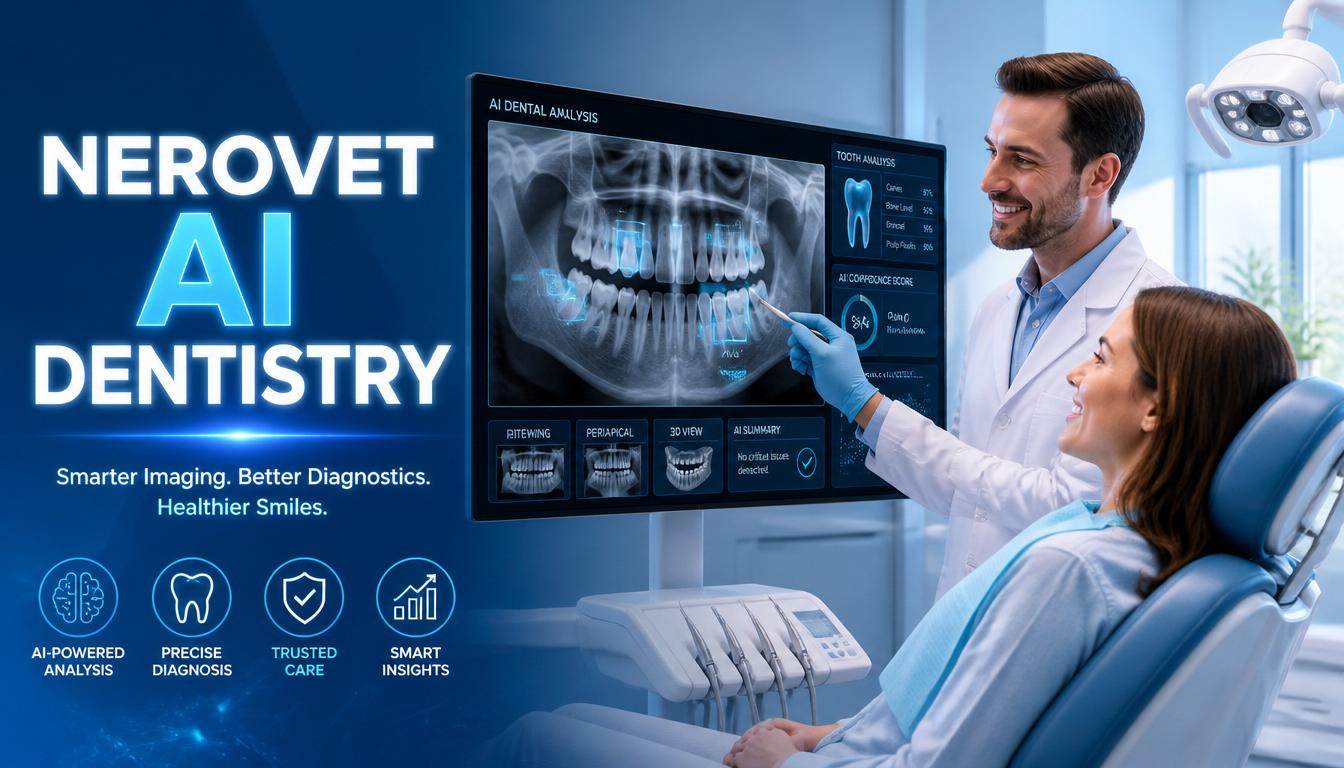
Nerovet AI dentistry is changing the way people look at dental images. It uses smart AI technology to study dental X-rays and helps find possible tooth and gum problems in a fast and simple way. Many clinics, teachers, and researchers use this type of technology to support their work. It is made to save time, improve learning, and help people understand dental health more easily.
Nerovet AI dentistry does not replace a dentist. Instead, it works as a helpful tool that gives quick results from dental images. It can point out areas that may need a closer look and help professionals make better decisions. In this guide, you will learn how it works, its main features, benefits, limitations, and why many people are interested in AI-powered dental imaging today.
What Is Nerovet AI Dentistry and Why Is It Becoming Popular?
Many people now want faster and smarter ways to understand dental health. Nerovet AI dentistry is one example of how modern technology is helping in this area. It uses artificial intelligence to study dental X-rays and point out places that may need a closer look. This gives dental teams helpful support while they review images. It is becoming more popular because it is simple to use and gives quick results.
Unlike older methods that depend only on careful human review, AI can compare image patterns in just a few seconds. It looks for signs that may match common dental problems and presents them in an easy way. This does not mean the AI makes the final decision. A trained dental professional still checks the findings and decides the best care for each patient.
Today, many dental schools, research centers, and clinics are exploring AI tools to improve learning and daily work. Students can practice reading dental images with extra guidance, while experienced professionals can use AI as another source of support. As technology keeps improving, more healthcare providers are becoming interested in using these systems to make their work more efficient.
Most importantly, people also like tools that help explain dental images in a simple way. When patients understand what is happening inside their mouths, they often feel more confident about their care. This better communication helps build trust between patients and dental professionals, making every visit a little easier.
Dentistry has changed a lot over the past few years. Digital X-rays, cloud storage, and smart software have already made many tasks easier. AI is another step forward because it can review images very quickly without getting tired. It can highlight possible areas of concern that deserve more attention during the examination.
Another reason for its growing popularity is consistency. Computers analyze every image using the same process each time. While dentists always use their knowledge and experience, AI provides another layer of support that can help reduce the chance of missing small details. This teamwork between technology and professionals may improve the overall workflow.
Many clinics also appreciate that AI tools can save valuable time. Instead of spending extra minutes reviewing every image from the beginning, dental teams can start with the AI findings and then complete a careful professional evaluation. This allows more time for discussing treatment plans and answering patient questions.
As more studies continue to explore artificial intelligence in healthcare, interest in these systems is likely to grow. Even so, experts agree that AI works best as a support tool rather than a replacement for trained professionals. Human knowledge, clinical skills, and patient care remain the most important parts of every dental visit.
How Nerovet AI Dentistry Studies Dental X-Rays Step by Step
Every dental image contains many small details that may not be easy to notice at first glance. Nerovet AI dentistry is designed to study these images by using machine learning models trained to recognize different patterns. The goal is to provide quick support that helps dental professionals review X-rays more efficiently.
First, a clear dental X-ray is uploaded into the system. The software checks the image quality before starting the analysis. A clear image helps the AI produce more reliable results. If the picture is blurry or has too much noise, the analysis may not be as useful, which is why good image quality always matters.
Next, the AI begins scanning different parts of the dental image. It compares what it sees with patterns learned from many training examples. During this process, the software may highlight areas that appear unusual. These markings are only suggestions and should always be reviewed by a qualified dental professional before any decision is made.
After the scan is complete, the system creates an easy-to-read report. Some tools also include confidence scores or simple notes that explain why certain areas were highlighted. This makes it easier for dentists, students, or researchers to understand what the software has found before completing their own examination.
The speed of AI analysis is one of its biggest advantages. Instead of waiting several minutes for a full review, the software can often complete its first analysis within a few seconds. This faster process allows dental teams to focus more on patient care instead of spending extra time reviewing every image from the beginning.
Another helpful feature is that the software can work with several types of dental X-rays. Depending on the system being used, it may support bitewing, periapical, or panoramic images. This flexibility allows different clinics and educational programs to use the technology for a wide range of learning and screening activities.
Even though AI is very smart, it still has limits. It only studies the information shown in the uploaded image. It cannot ask patients about pain, medical history, or other symptoms. That is why a complete dental examination always includes both image analysis and a professional clinical evaluation.
By combining fast computer analysis with expert human judgment, modern dental care can become more organized and easier to understand. AI helps point out possible findings, while dentists use their education, experience, and patient discussions to make the final diagnosis and recommend the most suitable treatment plan.
Main Features That Make Nerovet AI Dentistry Different
Modern dental care is changing with the help of smart technology. Nerovet AI dentistry offers several useful features that make dental image analysis faster and easier to understand. Instead of simply showing an X-ray, the system studies the image and points out areas that may need closer attention. This gives dental professionals extra support while reviewing patient records.
One important feature is automatic image analysis. After an X-ray is uploaded, the software quickly scans the picture and searches for patterns linked to common dental problems. The results are displayed in a simple format that is easy to read. This can help save time during busy clinic hours and improve the overall workflow.
Another useful feature is confidence scoring. Along with highlighted areas, the software may show how confident it is about each finding. These scores help professionals understand which areas deserve a closer review. However, the scores are only a guide and should never replace careful clinical judgment by a trained dental expert.
The platform is also designed to be user-friendly. Many AI tools work directly in a web browser without requiring complicated software installation. This makes it easier for clinics, teachers, and students to begin using the system with only a few simple steps.
Many AI systems also support different analysis modes. Depending on the type of image and the purpose of the review, users may choose automatic, medical, classification, or detection options. Each mode is designed to study dental images in a slightly different way, giving users more flexibility for different situations.
Fast processing is another reason people appreciate these tools. Instead of waiting a long time, many images can be reviewed within only a few seconds. This allows dental teams to spend more time talking with patients instead of focusing only on computer screens.
Educational support is another valuable feature. Dental schools can use AI to help students practice reading X-rays and learning about different dental conditions. Students receive extra guidance while still learning how to make careful observations on their own.
As technology continues to improve, AI features are expected to become even smarter. Even so, every result should always be checked by a qualified dental professional. The best outcomes come when advanced technology works together with human knowledge and experience.
Benefits of Using Nerovet AI Dentistry for Early Dental Checks
Finding dental problems early can make treatment easier and may help protect healthy teeth for a longer time. Nerovet AI dentistry supports this goal by helping professionals review dental images quickly and carefully. While it does not replace a full dental examination, it can provide helpful information that supports early screening.
One major benefit is faster image review. AI studies dental X-rays in a short time and highlights possible areas that deserve attention. This allows dentists to begin their evaluations with useful information already available. Faster reviews can improve daily clinic routines and help patients receive timely feedback.
Another advantage is improved consistency. Computers use the same analysis process every time they examine an image. This helps provide stable and repeatable results. Dentists still make the final diagnosis, but consistent computer support may reduce the chance of overlooking small image details.
Patients may also feel more comfortable when dental images are explained with clear visual highlights. Seeing possible problem areas on the screen can make dental discussions easier to understand. Better communication often helps patients ask questions and feel more involved in their own oral health.
Early screening may also encourage preventive care. When small changes are noticed before they become larger problems, patients have more opportunities to improve daily brushing, flossing, and regular dental visits. Good habits can play a big role in keeping teeth and gums healthy over time.
Clinics may benefit from smoother workflows as well. AI can complete its first review while dental professionals prepare for the next steps of the examination. This creates a more organized process without changing the important role of professional decision-making.
Teachers and students also gain value from AI-supported learning. Students can compare their observations with AI findings while building their diagnostic skills. This creates useful learning opportunities in classrooms and training programs without replacing traditional education.
Although AI offers many benefits, it should always be viewed as a support tool. A complete dental check includes patient history, symptoms, physical examination, and professional experience. When technology and expert care work together, patients receive more complete and informed dental evaluations.
Who Can Use Nerovet AI Dentistry?
Artificial intelligence is no longer limited to large research centers. Today, Nerovet AI dentistry can be useful for many different groups that work with dental images. Its simple design allows both experienced professionals and learners to benefit from faster image analysis and clearer reports.
Dental clinics are among the main users of AI imaging tools. Dentists can review X-rays with extra computer support before making their final clinical decisions. This may help improve efficiency during busy working days while keeping patient care as the highest priority.
Dental schools also benefit from AI technology. Students often spend many hours learning how to recognize different dental conditions in X-rays. AI can provide another learning resource by highlighting possible findings and encouraging students to compare their own observations with the software’s results.
Researchers use AI to study large collections of dental images. By reviewing many cases, they can explore patterns, improve future software, and better understand how artificial intelligence may support dental healthcare. Research continues to play an important role in making AI systems more accurate and reliable.
Healthcare educators also find value in these tools. Teachers can use AI-generated reports during classroom discussions to explain image interpretation in a simple way. Visual examples often help students understand difficult topics more quickly.
Some hospitals and training centers may include AI as part of their digital healthcare systems. This allows different healthcare teams to review imaging information while supporting education and clinical research. As technology grows, more institutions are exploring these possibilities.
Patients themselves also benefit, even if they never operate the software directly. Easy-to-read reports and highlighted images help people understand what dentists are discussing during appointments. Better understanding often leads to greater confidence and stronger communication.
No matter who uses the technology, AI should always support—not replace—professional expertise. Human judgment, careful examination, and personalized treatment planning remain the foundation of safe and effective dental care.
Dental Problems Nerovet AI Dentistry Can Help Detect
Healthy teeth and gums are important for eating, speaking, and smiling with confidence. Nerovet AI dentistry is designed to study dental X-rays and point out image patterns that may be linked to common oral health conditions. It helps professionals notice areas that deserve a closer review, but it does not make the final diagnosis.
One condition that AI may help identify is tooth decay. Small cavities can sometimes be difficult to notice during the early stages. By carefully studying dental images, AI can highlight areas that may show signs of early damage. A dentist then examines these findings together with the patient’s symptoms before deciding on treatment.
Another area where AI may provide support is gum disease. Changes around the gums and the supporting bone may appear on dental X-rays. When these changes are noticed early, dentists can recommend better cleaning habits, professional treatment, or regular follow-up visits to protect long-term oral health.
AI may also help point out unusual image patterns that could be linked to broken teeth, infections near tooth roots, or other dental concerns. These findings are useful starting points for professional evaluation. They help dentists focus their attention while completing a full clinical examination.
Some dental conditions develop slowly without causing pain in the beginning. Because of this, regular dental checkups and X-rays remain very important. AI supports these examinations by reviewing images quickly and consistently, helping professionals notice details that deserve further attention.
Dental image analysis is becoming more advanced every year. As researchers continue improving AI models, the ability to recognize different dental conditions may become even better. However, new technology must always be supported by careful testing, research, and professional supervision before it becomes part of routine patient care.
Every patient is different, and no computer can understand a person’s complete medical history, daily habits, or physical symptoms from an X-ray alone. That is why dentists combine image findings with conversations, examinations, and clinical experience before making treatment decisions.
The best results come from teamwork. AI provides helpful image analysis, while dental professionals use their knowledge to create safe, personalized treatment plans. Together, they help patients receive more complete and informed dental care.
Is Nerovet AI Dentistry Accurate and Reliable?
People often ask whether AI can truly be trusted when reviewing dental images. Nerovet AI dentistry is built to provide consistent image analysis using trained computer models. Its purpose is to support dental professionals by reviewing X-rays quickly and highlighting possible areas of concern for further examination.
Accuracy depends on many factors. Clear, high-quality X-rays usually produce better results than blurry or damaged images. The quality of the AI model, the amount of training data, and regular software improvements also affect how well the system performs during image analysis.
Reliability also means producing similar results when studying similar images. Unlike people who may become tired after many hours of work, AI follows the same process every time. This consistent approach can provide another helpful layer of support during dental image reviews.
Even with strong performance, AI is not perfect. It may sometimes highlight normal structures or miss very unusual cases. For this reason, dental professionals always review the findings before making any diagnosis or recommending treatment. Human expertise remains the final authority.
Healthcare technology continues to improve because researchers regularly test and update AI systems. New data helps software become better at recognizing image patterns while reducing errors over time. Continuous research plays a key role in building more reliable healthcare tools.
Professional training is equally important. Dentists understand patient history, symptoms, physical examination results, and many other factors that computers cannot fully evaluate. AI only studies the information found in the uploaded image and cannot replace complete clinical care.
Patients should view AI as an assistant rather than an independent decision-maker. When used responsibly, it can improve efficiency, support learning, and help organize image reviews without taking the place of professional judgment.
A balanced approach gives the best results. Advanced technology and experienced dental professionals work together to provide careful, informed, and patient-focused dental care.
How to Get Better Results When Using Nerovet AI Dentistry
Using AI correctly can improve the quality of image analysis and make dental reviews more useful. Small steps before uploading an X-ray often have a big effect on the final report. Good preparation helps both the software and the dental professional.
Fresh, high-quality dental images provide the strongest starting point. Clear pictures allow the AI system to study fine details without being affected by unnecessary shadows or image noise. Proper positioning during the X-ray also improves overall accuracy.
Following the recommended image format is another helpful practice. Using supported file types and correct image sizes allows the software to process files smoothly. This reduces delays and helps produce faster analysis results.
Finally, every AI report should be reviewed together with a professional dental examination. Combining technology with expert knowledge gives patients the safest and most complete understanding of their oral health.
Tips for Better AI Analysis
- Use clear and well-focused dental X-rays.
- Avoid blurry, dark, or damaged images.
- Upload supported image formats only.
- Follow proper patient positioning during imaging.
- Keep imaging equipment well maintained.
- Review every AI result with a qualified dental professional.
Good Habits for Dental Clinics
- Train staff to capture high-quality X-rays.
- Keep software updated whenever new versions are available.
- Store patient images securely.
- Compare AI findings with clinical examinations.
- Continue learning about new AI developments.
- Maintain regular quality checks for imaging equipment.
Nerovet AI Dentistry for Learning, Research, and Modern Clinics
Artificial intelligence is becoming a valuable learning partner in modern dentistry. Many schools, researchers, and healthcare providers are exploring how AI can improve education and support daily clinical work. These tools help users study dental images in a faster and more organized way.
Students often need many examples before becoming confident in reading dental X-rays. AI provides another learning resource by highlighting image patterns that students can compare with their own observations. This supports learning while encouraging independent thinking.
Researchers also benefit from digital image analysis. Large collections of dental images can be reviewed more efficiently, allowing scientists to study trends, improve software performance, and develop future healthcare technologies. Research helps AI become safer and more useful over time.
Modern clinics use AI to improve workflow while keeping professional care at the center of every patient visit. Technology saves time during image review, but dentists continue making all important medical decisions based on complete examinations.
How Students and Teachers Benefit
- Practice reading many different dental X-rays.
- Compare personal observations with AI findings.
- Improve confidence during dental education.
- Support classroom discussions with visual examples.
- Learn modern healthcare technology.
- Build stronger diagnostic skills over time.
Why Clinics and Researchers Use AI
- Speed up dental image review.
- Support early screening activities.
- Organize large image collections.
- Improve educational research.
- Study new AI technologies.
- Enhance workflow while maintaining professional supervision.
Artificial intelligence will likely continue growing in healthcare during the coming years. As new research becomes available, AI tools may become even more helpful for education, screening, and image analysis. Even so, responsible use will always require professional oversight.
The future of dental care is built on cooperation between technology and skilled professionals. AI offers speed and consistency, while dentists provide experience, patient care, and thoughtful decision-making. Together, they create a stronger and safer approach to modern dental health.
Common Questions About Nerovet AI Dentistry
Many people have questions before using AI for dental image analysis. Learning how the technology works helps users understand both its strengths and its limits. Clear information also makes it easier to use AI responsibly.
One common question is whether AI replaces a dentist. The answer is no. AI supports dental professionals by reviewing images, but only a qualified dentist can diagnose dental conditions and recommend treatment based on a complete examination.
Another question is whether AI works with every type of dental image. Many systems support several common X-ray formats, but image quality remains very important. Clear images usually produce better analysis than poor-quality pictures.
People also ask about safety and privacy. Trusted AI platforms normally use secure systems to protect uploaded images. Users should always follow privacy rules and choose services that explain how patient information is stored and protected.
Good understanding leads to better use of technology. AI works best when users know both what it can do and what it cannot do. This balanced approach supports safer and more effective dental care.
Final Thoughts on Nerovet AI Dentistry and the Future of AI in Dental Imaging
Artificial intelligence is opening new opportunities in dental healthcare by making image analysis faster, more organized, and easier to understand. Nerovet AI dentistry shows how modern technology can support dental professionals, teachers, students, and researchers without replacing human expertise.
As AI continues to improve, its role in education, screening, and dental imaging will likely expand. Better software, stronger research, and responsible development may help create even more useful tools for the future of oral healthcare.
At the same time, professional judgment will always remain essential. Dentists consider medical history, symptoms, patient needs, and physical examinations before making any diagnosis. AI simply provides helpful information that supports these important decisions.
The future looks promising when technology and human experience work side by side. By combining smart software with compassionate dental care, patients can benefit from better communication, improved efficiency, and more informed oral health decisions for many years to come.
FAQs
Q: What is Nerovet AI dentistry?
A: Nerovet AI dentistry is an AI-powered tool that analyzes dental X-rays and highlights areas that may need professional review.
Q: Can Nerovet AI dentistry replace a dentist?
A: No. It is only a support tool. A qualified dental professional must always make the final diagnosis and treatment plan.
Q: What types of dental images can the AI analyze?
A: It can work with common dental X-rays, such as bitewing, periapical, and panoramic images, depending on the system being used.
Q: Is Nerovet AI dentistry useful for students?
A: Yes. Dental students and teachers can use it as a learning tool to practice reading X-rays and improve their diagnostic skills.
Q: How can I get the best AI analysis results?
A: Upload a clear, high-quality dental X-ray and always review the AI findings with a qualified dental professional.
Q: Why is AI becoming more popular in dentistry?
A: AI helps review dental images quickly, supports early screening, improves workflow, and assists professionals without replacing their expertise.